Sonic Mathematical Blossom – Pseudospherical Trinity (from Kuen)
2025
Powder-coated stainless steel frames, mesh and handle, liquid-coated stainless steel frames, casters, powder-coated stainless steel bells, stainless steel bells, acrylic mirrors, split rings
227 x 151 x 140 cm
185 x 150 x 110 cm
185 x 163 x 145 cm
Commissioned by Hyundai Motor Company
Installation view of Sonic Mathematical Blossom – Pseudospherical Trinity (from Kuen),
Hyundai Motor Group Headquarters in Yangjae, Seoul, South Korea, 2025
Photo: Cheolki Hong
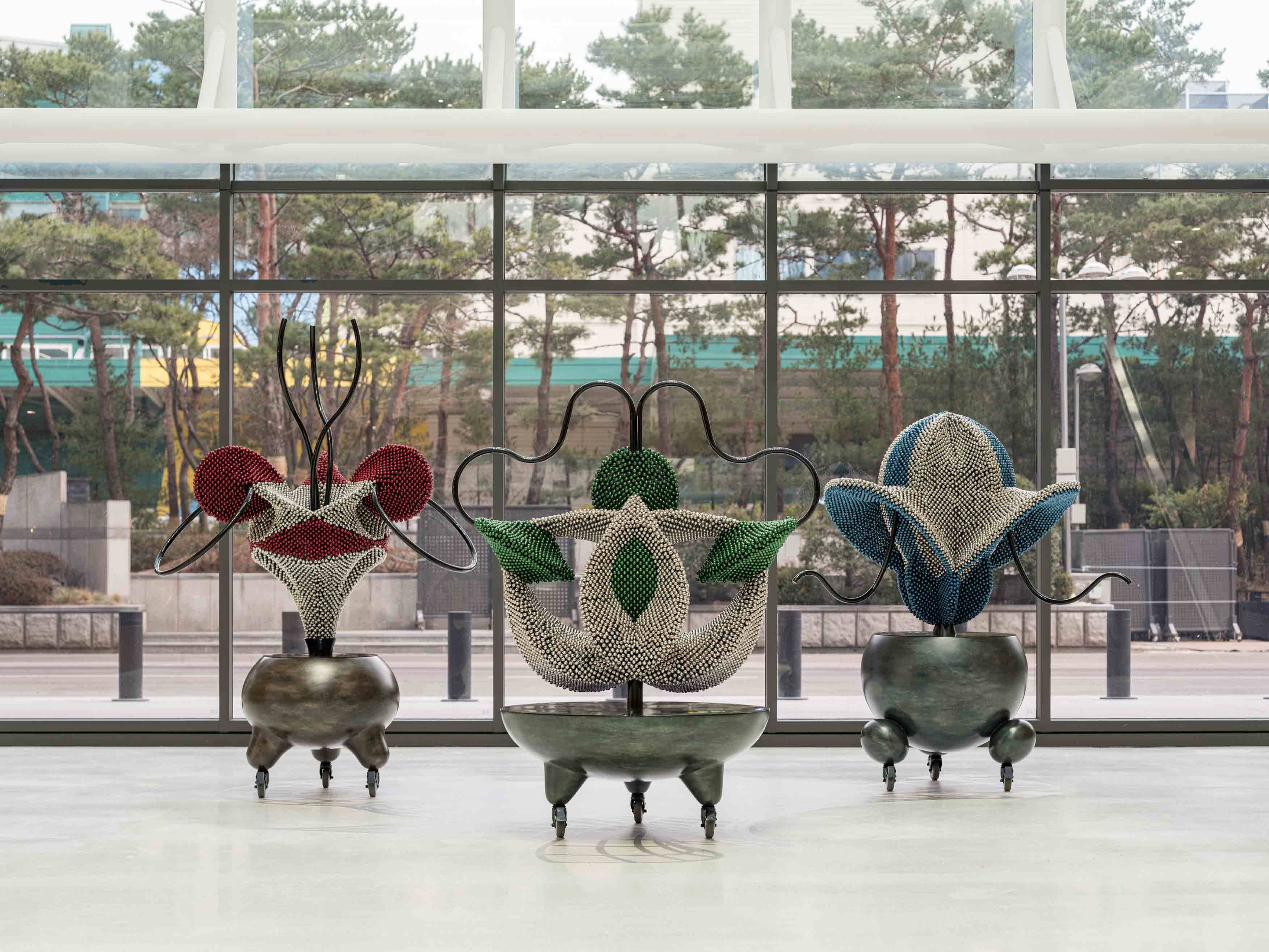
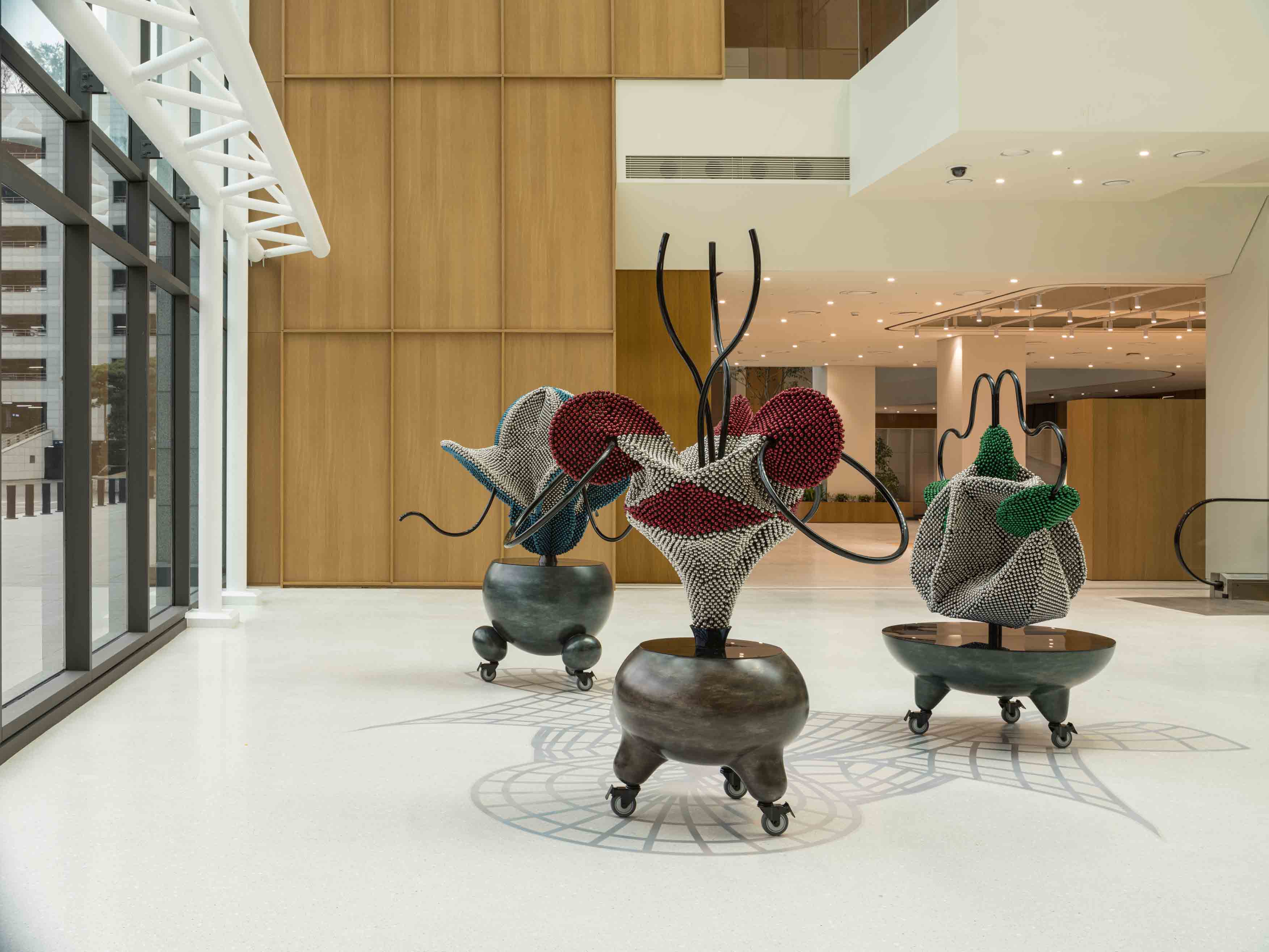
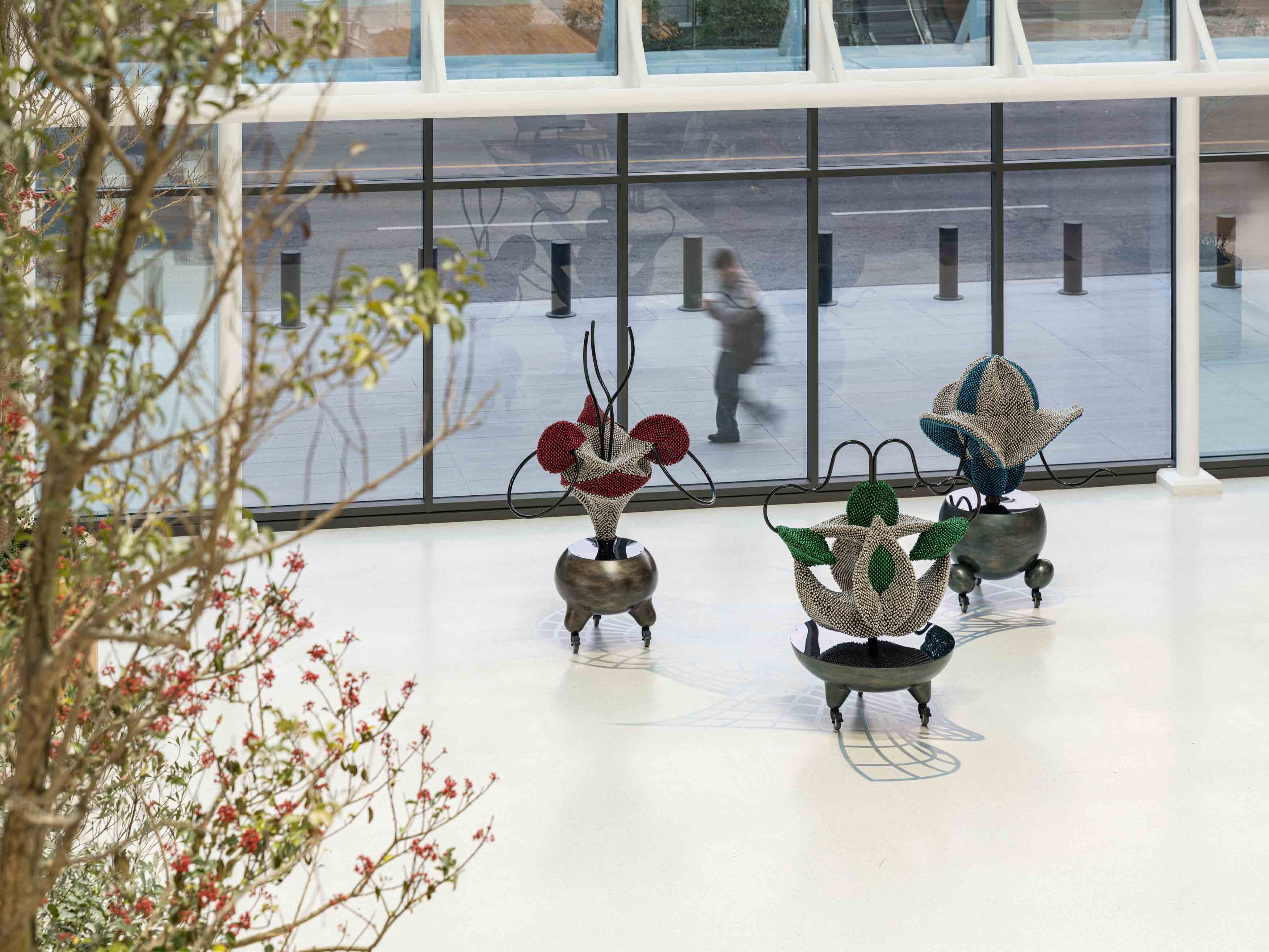
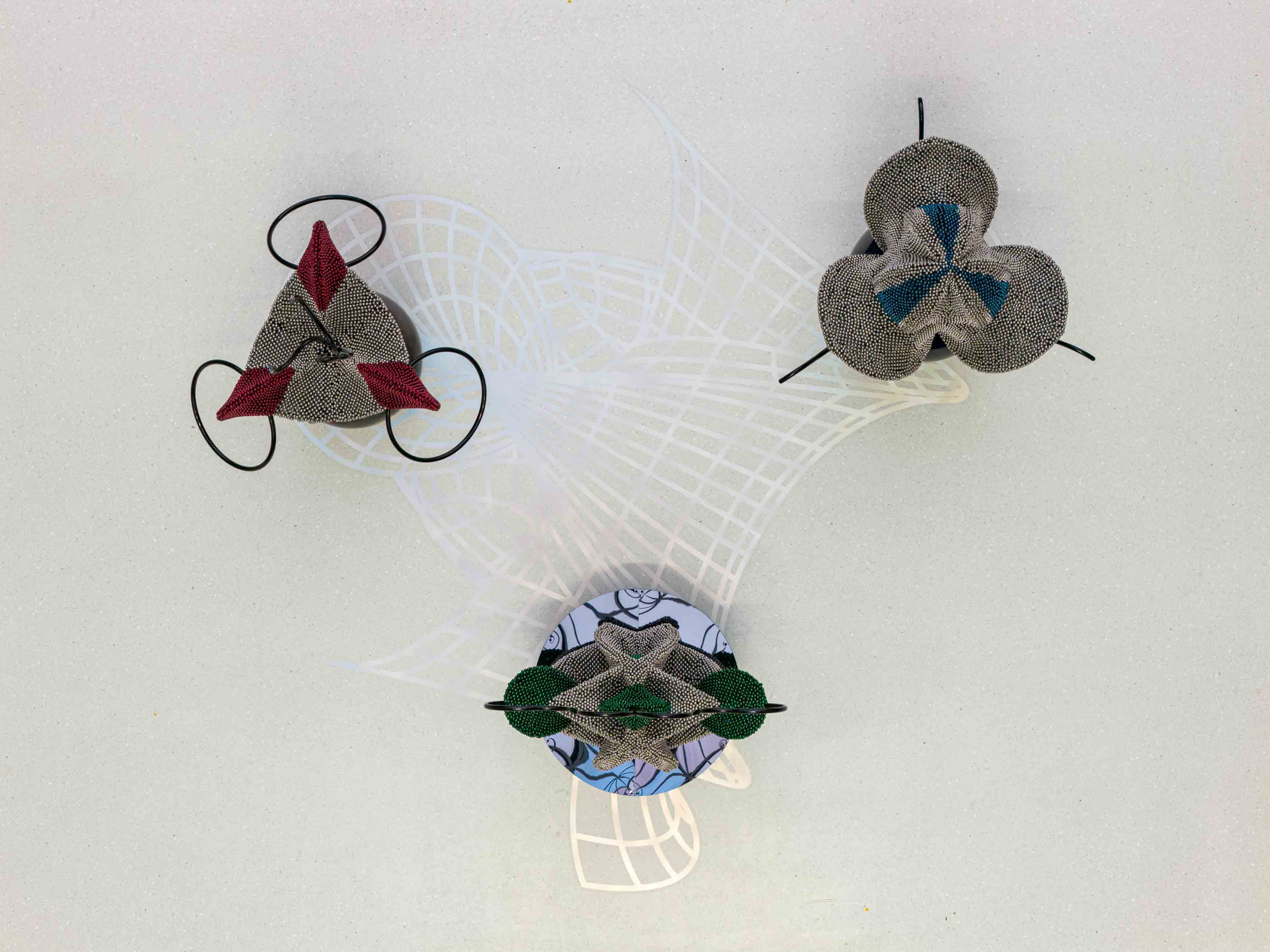

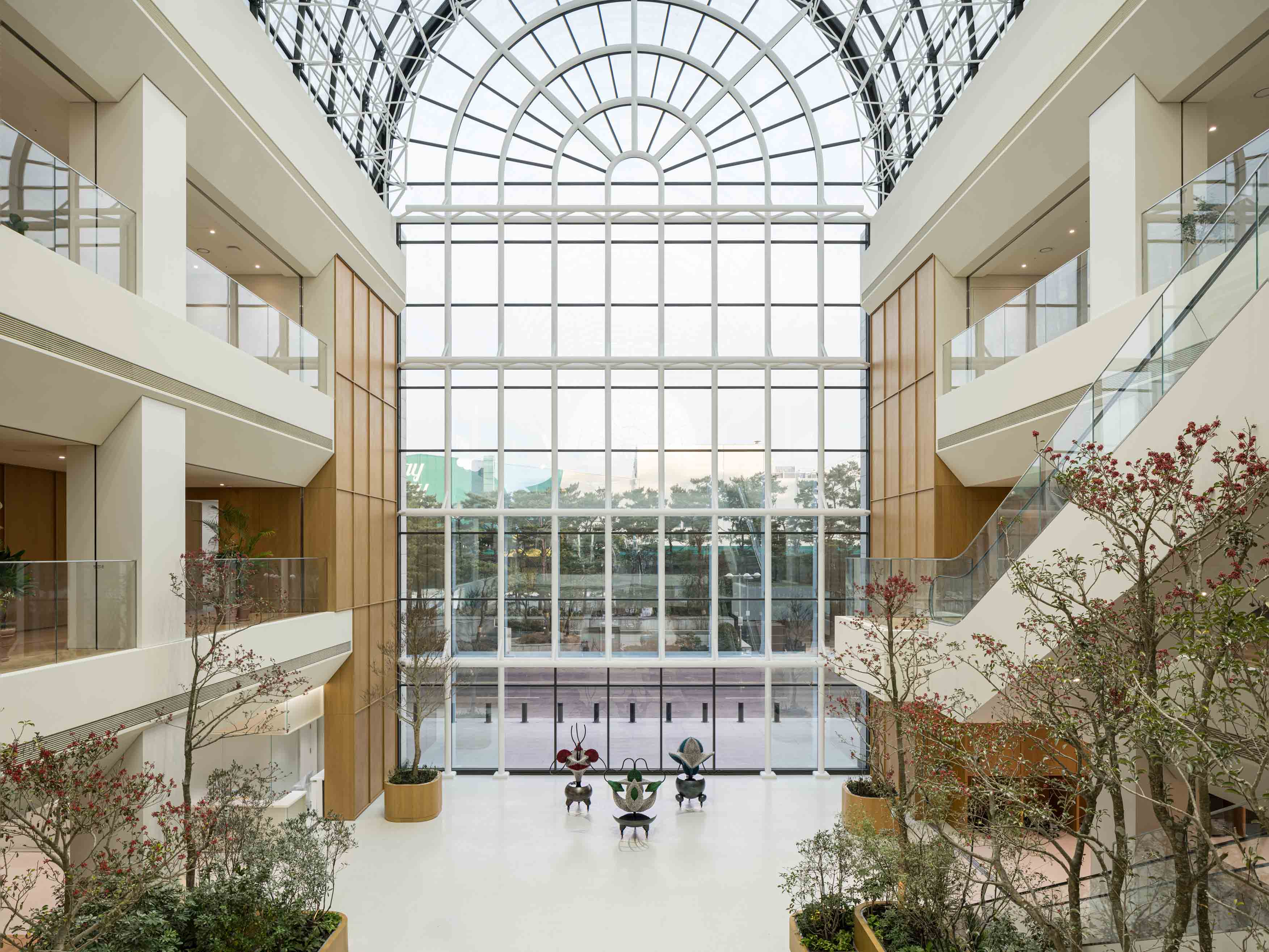

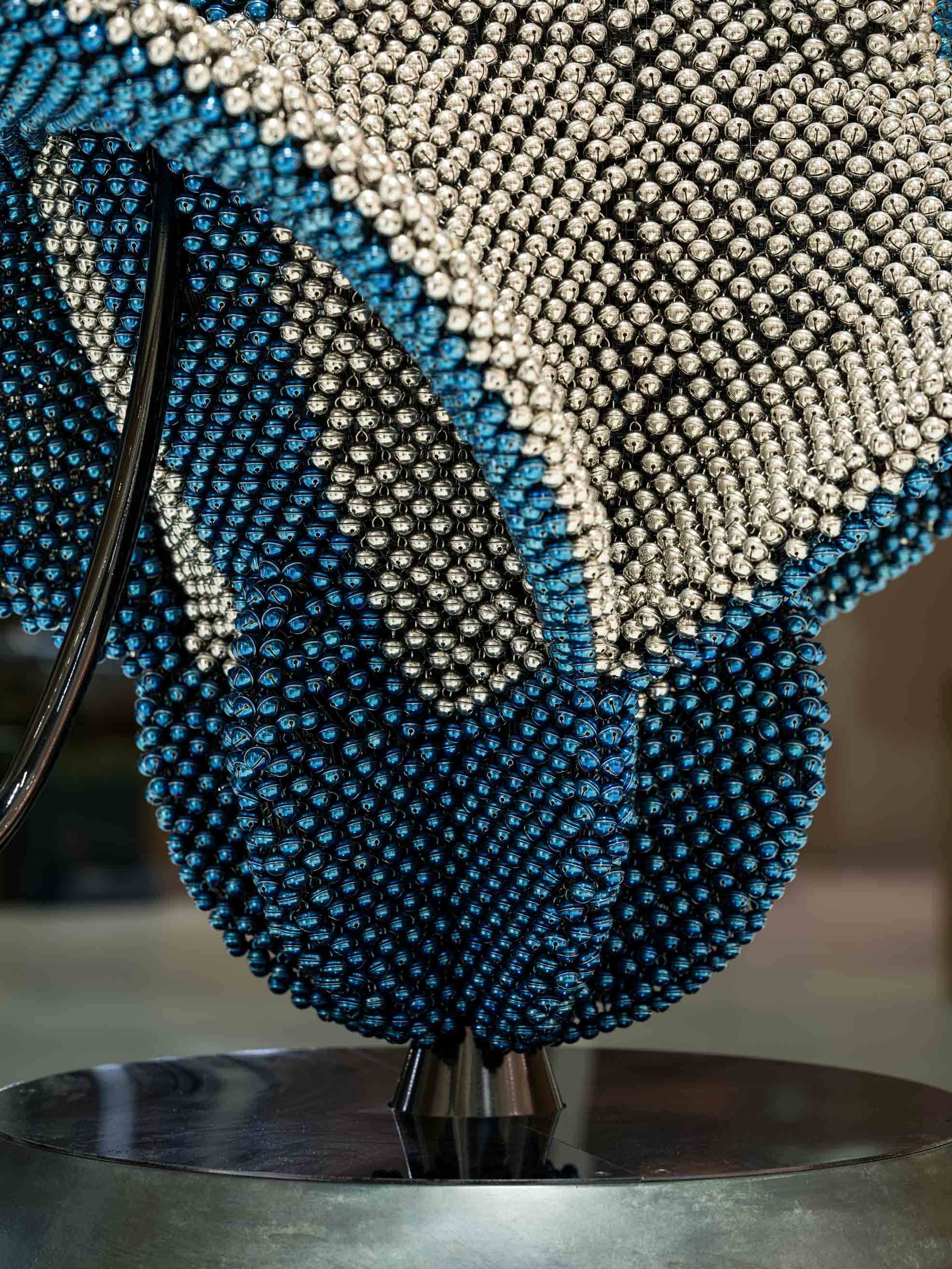
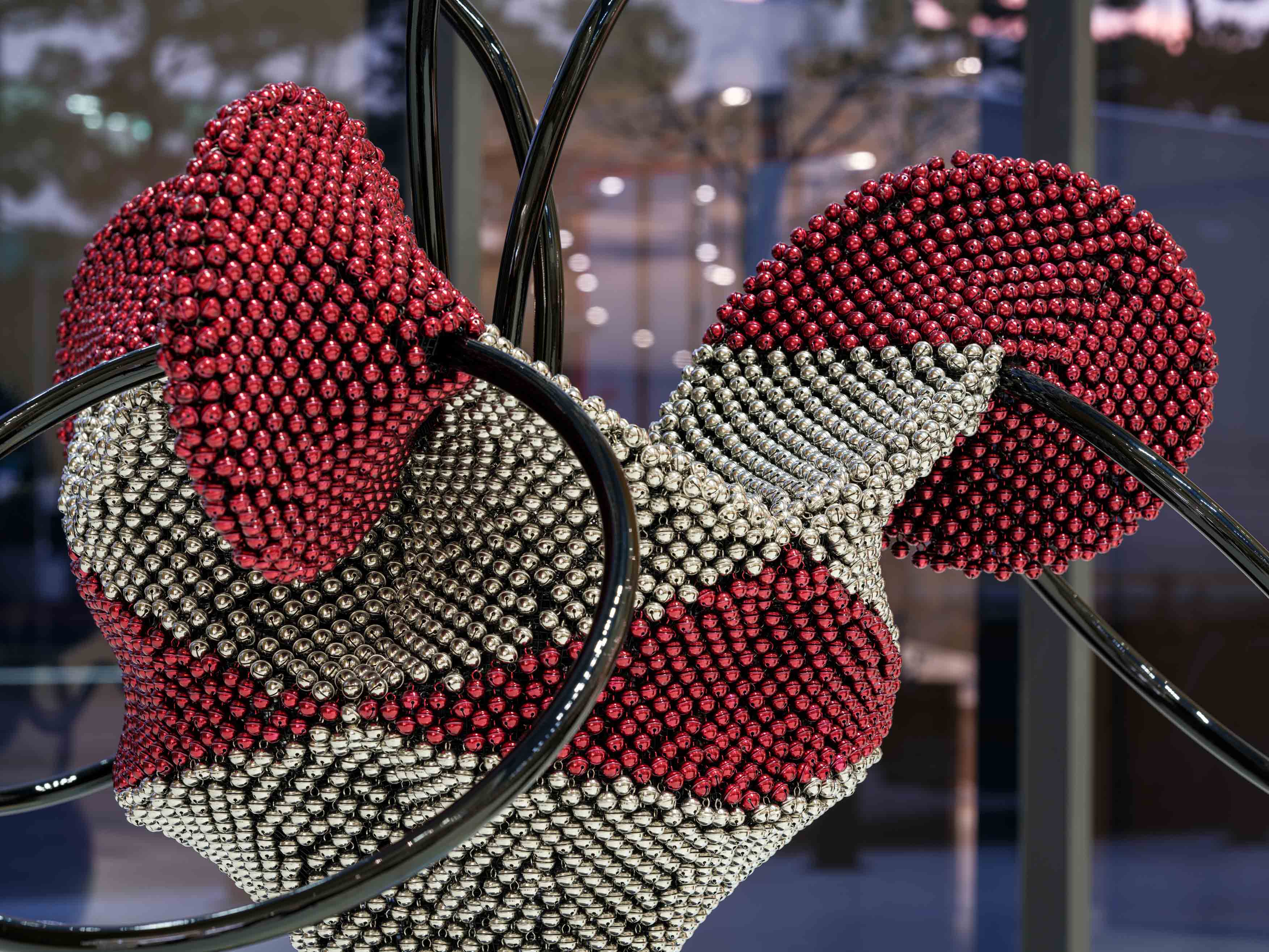
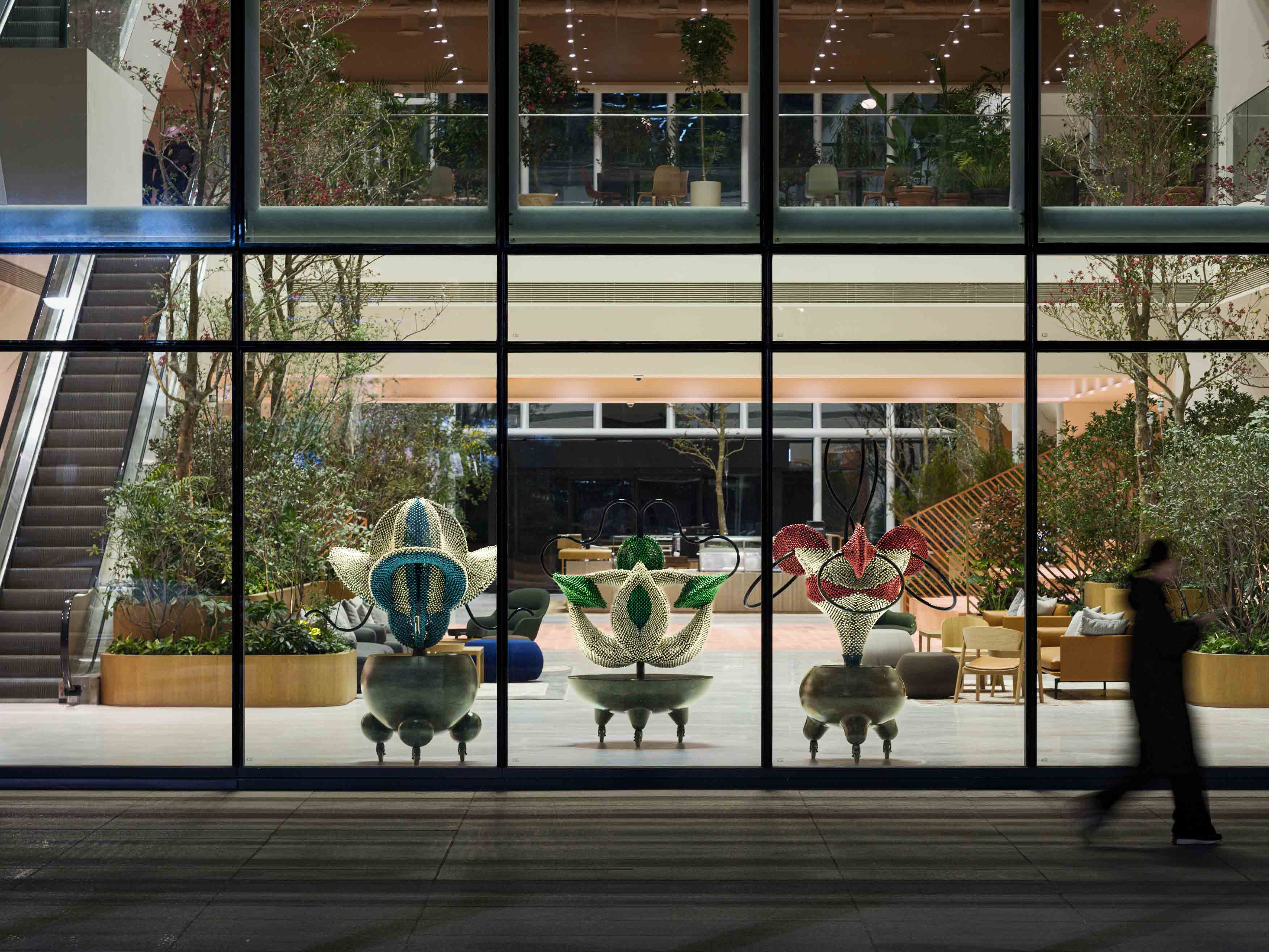
Diverging from the singular monumentality often associated with public sculpture, Haegue Yang has consistently focused on relational sculptural groupings. Sonic Mathematical Blossom – Pseudospherical Trinity (from Kuen) likewise consists of three interconnected sculptures that together form a single work, bringing into dialogue an everyday material—metal bells—and the abstract realm of mathematics. The work is inspired by the Kuen surface model by Theodor Kuen (years unknown), housed at the Institut Henri Poincaré in Paris. To produce the sculpture, a mathematical model visualizing curved surfaces was dismantled, mirrored, and recomposed into three distinct forms. As suggested by the subtitle Pseudospherical Trinity (from Kuen), repeated and symmetrical curved surfaces depart from the sphere to produce organic, plant-like structures. These “mathematical plants” rest on pottery-shaped pedestals inspired by the dark, coarse tripodal ceramics of Oaxaca, Mexico. The mathematical plant forms extending from the folk-inflected “pseudospherical” pedestals are divided into upper and lower sections around a smooth black mirrored surface, expressing Yang's distinctive hybrid world.
Commissioned by Hyundai Motor Company
Hyundai Artlab, Haegue Yang: Sonic Mathematical Blossom – Pseudospherical Trinity (from Kuen)
back to alphabetical order |
back to chronological order |